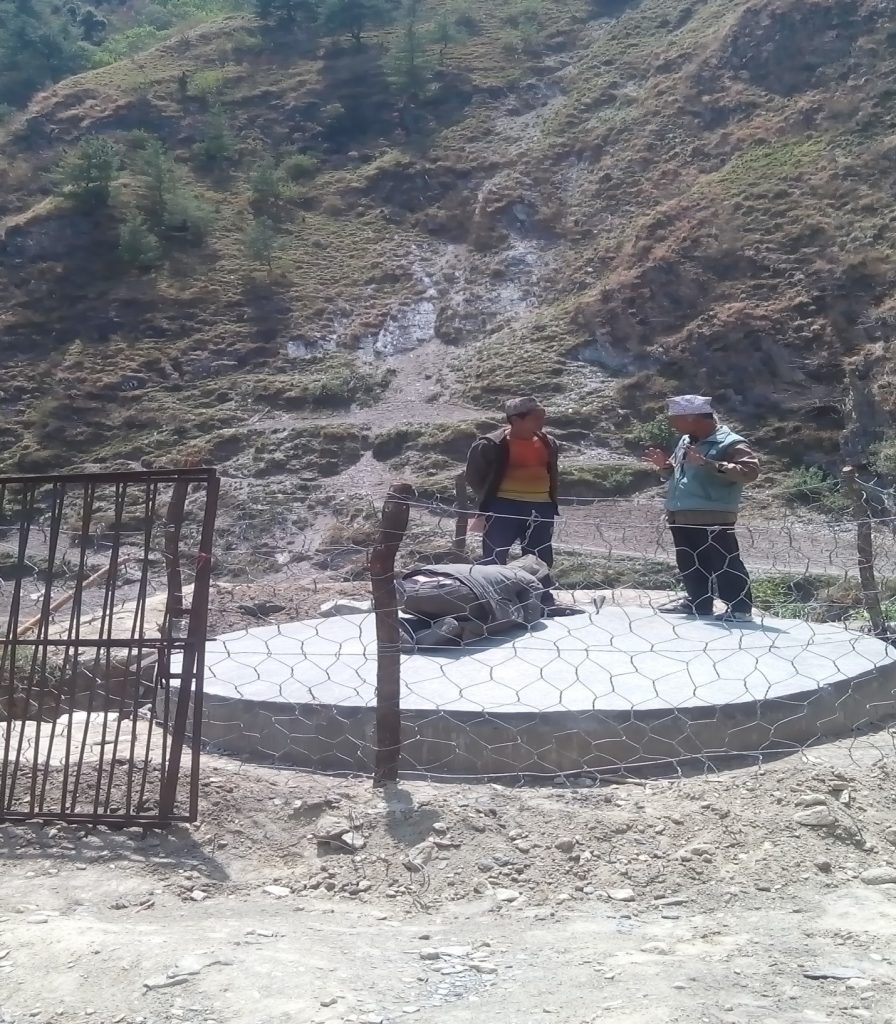
| Name of project | Rural Water Supply and Sanitation Development Project |
| Total Fund | NRs.14,420,000.00 |
| Duration | 2073/3/24 to 2074/3/31 |
| Funding sources | Rural Water Supply and Sanitation Fund Development Board (RWSSFDB) Maharajgunj, Katmandu |
| Contact person of the earlier donor agency | Ram Kumar Yadav |
| Beneficiary HHs | 475 |
| VDCs | Kalika&LanhaVDCDolpa |
| Major Interventions:
· Developed School Health Promotion Plans · Institutional Building of VDC/ Health Post, Schools, Local Markets and Other in the Scheme Area · Declared and maintained STATUS OF ODF (in Scheme implementation Ward · Managed Rural Community Infrastructures Work · Trained Drinking Water Consumer Committee, Vigilance Committee, Village Management Worker And Village Health Promoter before construction. · Trained Committee Treasurers on Financial Management, Financial Inclusion · Rehabilitation training for Rural Maintenance Workers · Post-construction training for Water And Sanitation Consumer Committee officials related to maintenance, operation, water supply management · Distributed 324 taps in households; 24 institutional taps in schools, clubs, health posts, local bazaars · Land ownership certificates of Drinking water schemes received · Construction, operation, maintenance, uses of 324 household toilets and 24 institutional toilets · Conducted household survey on health, sanitation, hygiene, menstruation hygiene, Chaupadi, nutrition intake, child health, occupational health and safety. · Conducted health orientation, training, mentoring, counseling, interaction on ‘Uses of Soaps, Hand-washing, Cleanliness, Safe Drinking Water, Menstruation Health and Hygiene, Solid Waste Management, Dish-Washing, Making Dish-Sun-Dryer, Management of recyclable and non-recyclable Waste, · Formed, capacity development, mobilization of 51 Child Complete Hygiene and Sanitation Groups; Youth Complete Hygiene and Sanitation Groups; Mothers’ Complete Hygiene and Sanitation Groups; and · Formed, managed and mobilized 21 Survey Evaluation Committees · Designed, developed and constructed Garbage Bins or Containers · Designed, developed and constructed Kitchen Dish Washing Stations · Designed, developed and constructed Sun Dish Dryer Stations · Designed, developed and constructedWaste Water Management (Drainage) · Designed, developed and constructed cow and animal sheds, pet-sheds and maintained their sanitation. · The WASH Committees were able to develop Community maps; Maps of the projects (water source, distribution lines, drinking water taps (households and public), Household Survey on Health; Mobilization of field staffs and adminstritive works; follow standard decision making processby Executive Committee of the Drinking Water and Sanitation Consumer Committee; received land ownership certificates related to projects areas. · Enhanced home and community sanitation, personal hygiene and community health. · Designed, developed and constructed Gardening in home-around · Training and orientation on Hand Washing after using the toilets. · Training and orientation on Kitchen Gardening, vegetables farming, horticulture, bee keeping, animal husbandry and explored other viable income generation schemes. · Formed, developed capacity, mobilized the Women’s Saving Groups and Self-Help Groups · Conducted nail cutting campaigns · Conducted Hand washing campaigns with soapy water · Conducted households chores cleaning campaigns · Conducted campaigns to clean streets and public places · Conducted Sanitation-related public speech, quiz, song competitions · Conducted Spelling competition related to WASH · Conducted as campaigns street drama, duet songs on WASH · Collected water utilizing fee, manage the fund and utilizes for its operation, maintenance, and equitable distribution of drinking water · Enhanced water sources protection and their sanitations, · Decreased wild-fire and protected the forest building blocks; · Decreased the incidents of cholera, typhoid fever, Giardiasis, Cryptosporidiosis,dysentery, tapeworms, Jaundice, fever, diarrhea, and other water-sanitation borne diseases. · Increased students enrollments in schools, and their retention and upgraded academic performances, · Enhanced the socio-economic, financial status of the peoples of the program areas · Enhanced the community bondages, cultural ties and decreased the disputes, quarrels, and unhealthy completions and force rule. |
|